
Pickleball Is the Best Thing That Happened to Your Social Life. It Is Also Sending People Your Age to the ER.
The fastest-growing sport in America is fueled by players over 55 — and so is its injury list. Emergency-room data tells a consistent story, and almost all of it comes down to one bad instinct: backing up.
Let us start with the good news, because there is a lot of it.
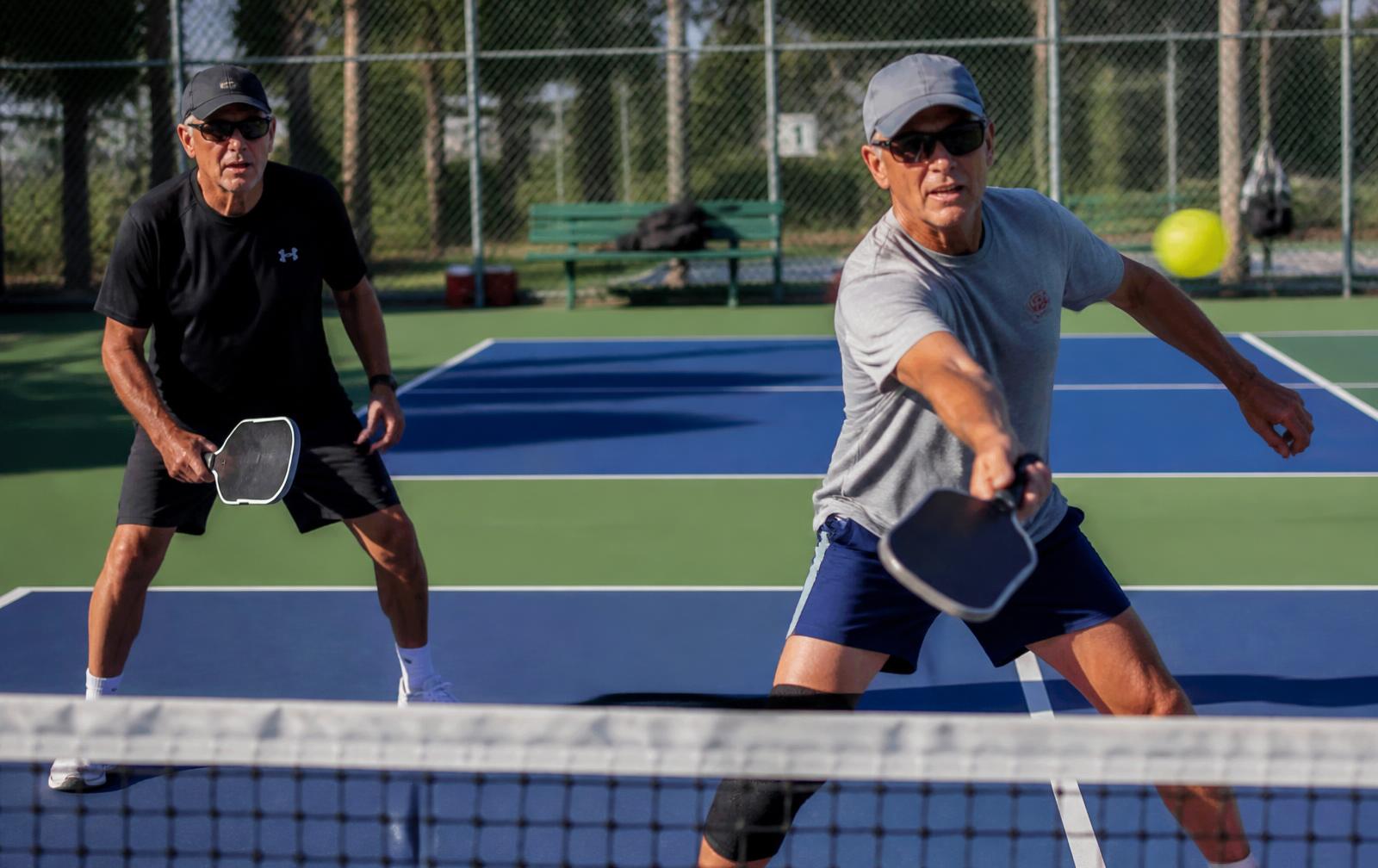
Pickleball is the best social technology invented for people over 55 in the last fifty years. Four people, one small court, a game you can learn in twenty minutes, and a built-in reason to show up three mornings a week and talk trash. Cardio disguised as friendship. Nothing else does that.
Now the part the paddle companies do not put on the box.
Researchers at the Icahn School of Medicine at Mount Sinai published a ten-year analysis of pickleball injuries showing up in U.S. emergency departments, and the trend line goes one direction: sharply up. Follow-up work published in 2026 found the same pattern. And the injuries are not evenly spread across the population. They cluster in older adults — the exact group that made the sport explode.
That is not an argument to quit. It is an argument to stop playing like you are 34.
The one move that hurts almost everyone
Ask any orthopedist who treats pickleball players and you get the same story. The injury usually is not the swing. It is the backpedal.
Somebody lobs you. Your instinct — built in a body that used to be faster than it is — is to shuffle backward with your eyes up on the ball. You lose your heel, your center of gravity goes behind you, and there is no time to catch it. You land on a wrist or a hip on a hard surface, from full height, with your arm out.
That is the mechanism. Falls on a hard court, wrist fractures, hip and shoulder injuries. Not exotic. Not bad luck. One predictable instinct.
The fix is a rule, not a skill: never backpedal. Turn, pivot, and run sideways or forward to the ball. If the lob is over your head and you cannot turn in time, let it go. A lost point costs you nothing. A distal radius fracture at 68 costs you a season, a surgery, and possibly some grip strength you never fully get back.
The other four things that put people your age on the injury list
Playing cold. Walking from the car to the kitchen line in ninety seconds is how calf and Achilles injuries happen. Five minutes of walking and easy dinking is not optional after 55 — it is the price of admission.
Court shoes, or nothing. Running shoes are built to move you forward and have soft, rounded heels that roll under lateral load. Pickleball is almost entirely lateral. Wear actual court shoes with a flat, stable base. This is the cheapest injury prevention money can buy.
Five hours of open play. Older tendons and joints do not object to intensity nearly as much as they object to volume. Two hard hours, then go home. The injuries tend to arrive in hour four, when your legs are done and your competitive brain has not noticed.
Ignoring the calf twinge. That little grab in your calf is not nothing. Achilles tears in this age group are frequently preceded by a week of "it feels tight." Take three days off. Three days is cheaper than three months.
What to actually do about it
- Train the fall you hope to never take. Single-leg balance work — thirty seconds a side while you brush your teeth — is the least glamorous and most protective thing on this list.
- Strengthen the posterior chain. Calf raises, glute bridges, hamstring work. Twice a week. This is what lets you decelerate instead of topple.
- Play more doubles, less singles. Singles at 60-plus is a sprinting sport. Doubles is a positioning sport. One of those you can do for twenty more years.
- Learn to say "yours." Court collisions between partners are common and completely avoidable with one syllable.
- Get eyewear. Ball-to-eye injuries at the kitchen line are rare but genuinely serious. Cheap protection.
The honest bottom line
The health case for pickleball is overwhelming. Cardiovascular fitness, balance, reaction time, and — maybe most important at this stage of life — regular in-person social contact, which shows up in the longevity research as forcefully as exercise does.
The risk is real, but it is specific. It is not "the sport is dangerous." It is "hard courts plus backpedaling plus cold muscles plus four hours of play equals a broken wrist."
Change four habits and keep the whole upside. Keep backing up for lobs and you will eventually meet a doctor who plays too.
Sources: Mount Sinai's ten-year epidemiologic analysis of pickleball injuries in U.S. emergency departments (Orthopaedic Journal of Sports Medicine) and subsequent 2026 emergency-department epidemiology research. General information, not medical advice — talk to your own doctor before starting or changing a training routine.
Share a line
Pass this one along
Pick a line, save the card, and send it to whoever needs to read it.
Your next step
Questions about your own retirement?
Talk it through with a licensed advisor on our team. Ask your questions, get straight answers, and leave with a clear place to start. No cost, no obligation, nothing sold on the call.
Run your own numbers
The Let’s Start tool
Prefer to try it yourself first? It’s a calculator that sets a retirement income target and shows how much savings could support it.
Open the Let’s Start →Advisory and insurance services are provided by licensed professionals; availability varies by state.
The Conversation
No comments yet. Tell us where we got it right — or where we're dead wrong.
Comments are for members — it keeps the spam out and the conversation honest.
Create a free account