
Protecting Your Digital Life After You're Gone
Your email, photos, subscriptions, and crypto don't disappear when you do. A practical digital legacy guide from Abrahamsen Financial Group.
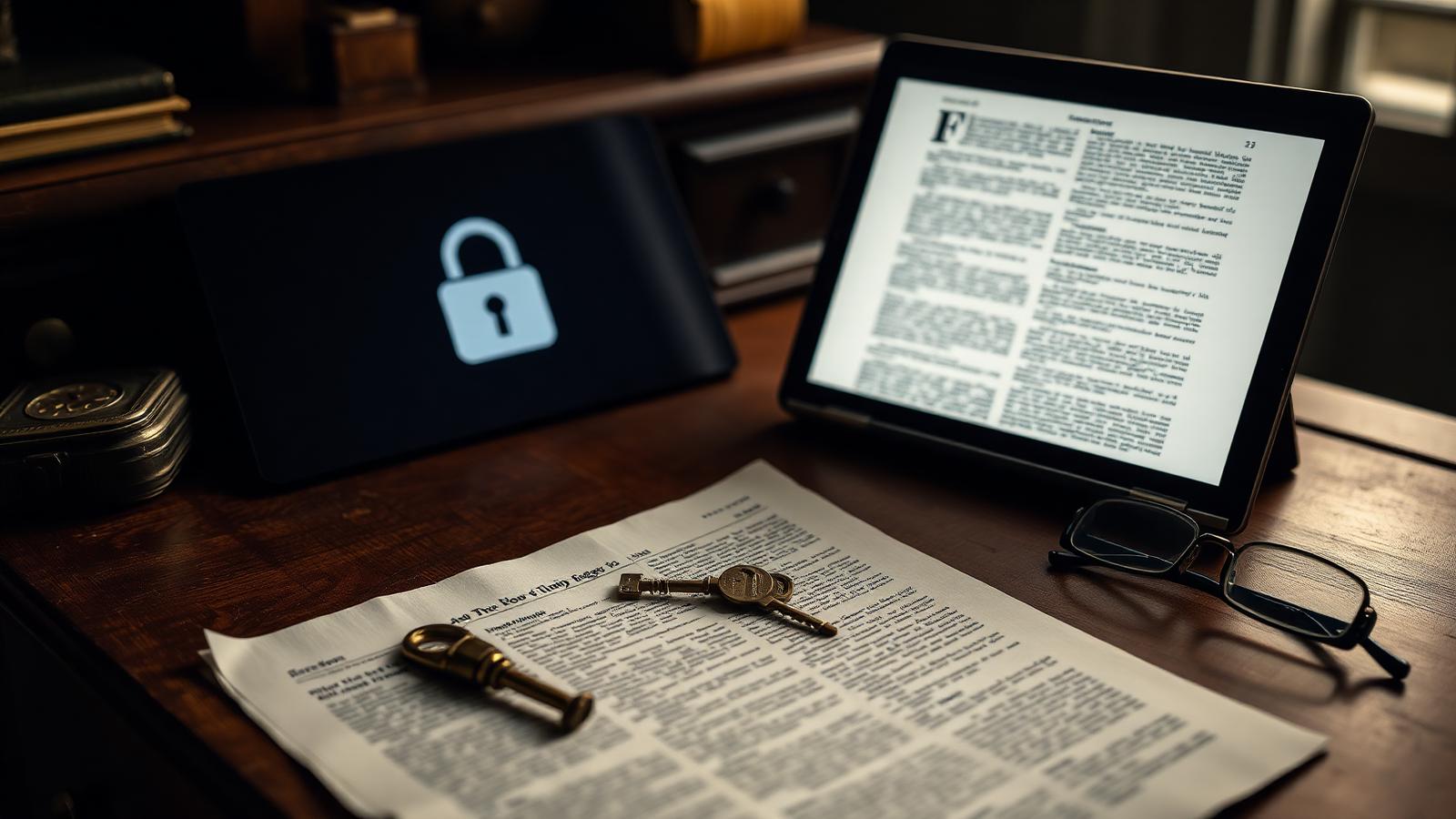
Today, most of modern financial and personal life lives online — email, bank and investment accounts, cloud storage, streaming services, even cryptocurrency. Yet many estate plans still focus on physical property and traditional accounts, leaving a major gap when someone passes away.
At Abrahamsen Financial Group, we believe digital legacy planning belongs inside a complete retirement and estate strategy. The steps below can help your family avoid lockouts, ongoing subscription charges, and the loss of important digital assets.
Why digital legacy planning matters
When someone dies without a digital plan, family members are often locked out of key accounts — and forced to guess what accounts even exist. They may lose access to sentimental photos, important records, rewards balances, or assets with real financial value.
Common problems include:
- Subscription services that keep charging after death because nobody knows they exist.
- Photos, files, and records trapped behind passwords and two-factor authentication.
- Email and social media accounts left open and vulnerable to misuse or hacking.
- Cryptocurrency that becomes permanently inaccessible without the private keys or seed phrases.
The good news: most of these issues can be reduced or avoided with a few straightforward planning decisions.
Step 1: Name a digital executor
A digital executor is the person you choose to manage, transfer, or close online accounts after death. It can be the same person serving as your traditional executor — but the more important qualities are trustworthiness, technical comfort, and willingness to handle a time-consuming task.
Document the decision in writing — ideally in your will or in a separate letter of instruction known to your estate executor. Verbal instructions alone may leave even a willing family member without clear authority to act.
Step 2: Activate platform legacy tools
Several major platforms already provide built-in legacy tools, but most account holders never turn them on. Setup usually takes minutes and can make account access dramatically easier for loved ones later.
Google's Inactive Account Manager lets you decide what happens after a period of inactivity: delete the account, or grant a trusted person access to Gmail, Google Photos, Drive, and YouTube.
Apple
Apple's Legacy Contact feature lets you choose one or more people who can request access to photos, messages, notes, and files after death. Access relies on a key created in advance together with required documentation.
Facebook and Instagram
Both platforms let you choose whether an account should be memorialized or deleted. A designated legacy contact may be able to manage parts of a memorialized profile — posting a final tribute, responding to friend requests.
Step 3: Create a secure credential record
This is where most digital legacy plans break down. Some people store nothing. Others keep passwords in insecure or inaccessible places — unencrypted files, notes apps, or paper scraps.
A stronger approach: use a password manager with emergency-access functionality. Services such as 1Password, Bitwarden, and LastPass may allow a designated emergency contact to request access after a waiting period, balancing security with family access.
If a password manager isn't realistic, a written inventory stored with estate documents or in a fireproof safe is still better than no plan at all. Do not keep that inventory in an unencrypted digital file.
Don't overlook subscriptions
Recurring charges don't stop automatically when someone dies. Streaming services, software subscriptions, memberships, and autopay arrangements may continue billing until someone actively cancels them.
A simple inventory — service name, login email, and approximate monthly cost — can save your family time, money, and frustration during an already difficult period.
Cryptocurrency needs special attention
Cryptocurrency held in a private wallet can become permanently inaccessible without the private key or seed phrase. Unlike a bank password, there is no institution that can restore access.
If you own crypto, secure storage of access instructions and clear direction for your digital executor are essential. In practical terms, this can determine whether the asset is inherited — or lost entirely.
Why a traditional will may not be enough
Traditional wills were built for a paper-based world and are often not specific enough to handle digital accounts. State laws provide only limited or inconsistent access, leaving many digital assets in a legal gray area.
The safest course: document digital assets separately, use each platform's built-in legacy tools, and keep instructions updated as part of a broader retirement and estate plan.
How AFG frames the conversation
At Abrahamsen Financial Group, digital legacy planning sits alongside retirement income strategy, tax planning, RMD preparation, and planning for the unexpected. A complete financial plan should account not only for what you own — but for how loved ones will actually access and manage those assets when the time comes.
Families who organize digital accounts now can reduce confusion later, protect sensitive information, and make difficult transitions easier for the people they care about most.
Share a line
Pass this one along
Pick a line, save the card, and send it to whoever needs to read it.
Your next step
Questions about your own retirement?
Talk it through with a licensed advisor on our team. Ask your questions, get straight answers, and leave with a clear place to start. No cost, no obligation, nothing sold on the call.
Run your own numbers
The Let’s Start tool
Prefer to try it yourself first? It’s a calculator that sets a retirement income target and shows how much savings could support it.
Open the Let’s Start →Advisory and insurance services are provided by licensed professionals; availability varies by state.
The Conversation
No comments yet. Tell us where we got it right — or where we're dead wrong.
Comments are for members — it keeps the spam out and the conversation honest.
Create a free account