
They Called Catcher a Problem. Then They Didn't Fix It.
A former advance scout's honest read on why the deadline left the biggest hole untouched — and what it will cost down the stretch.
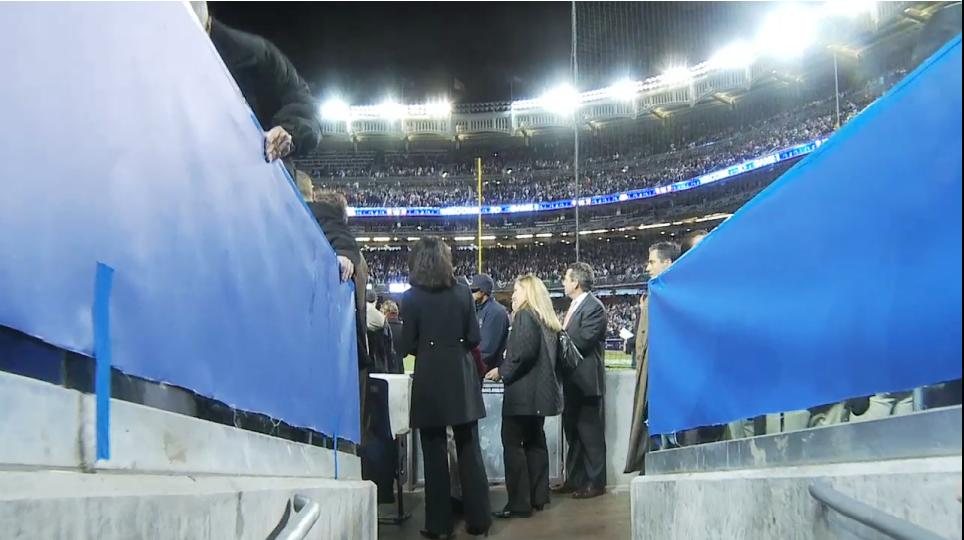
Brian Cashman said it himself in July: the catching situation is "an issue, clearly." Then the trade deadline came and went, and nothing was done about it. That's not a small oversight for a team trying to win the AL East. It's the kind of unresolved weakness that shows up in October, in exactly the moments where a lineup like this needs no soft spots.
The Numbers Are Not Close
Austin Wells, J.C. Escarra, and Ali Sánchez combined for a wRC+ of 43 through early July — the worst mark at the position in all of baseball — with a collective batting line around .175. That is not a slump. That is a full season of an automatic out at a position where opposing teams get to pitch around your best hitters and attack your catcher without fear. A contender cannot carry that into September and expect a different outcome than it got in July.
COACH'S NOTE: When you diagnose a problem correctly in July and still haven't fixed it by the deadline, that's not bad luck. That's a decision, and the front office needs to own it.
The Deadline Solved the Wrong Problem
To be fair, adding Luis García Jr. and Heliot Ramos was reasonable given the injuries piling up — Judge on the 60-day IL, Stanton and Bellinger banged up at the same time. You cannot field a lineup with three of your best hitters out and not add bodies. But neither move addressed catcher or the bullpen, the two spots evaluators flagged as priorities as far back as May. The club also traded closer-caliber reliever Camilo Doval to Pittsburgh, thinning a relief corps that already ranked in the bottom half of the league in strikeout rate despite a strong first-half ERA.
- Catcher: still unaddressed. Wells remains the primary option with no external upgrade added at the deadline.
- Bullpen: a net negative in swing-and-miss stuff after moving Doval; David Bednar and Jake Bird now carry more high-leverage innings than is ideal.
- Third base: Ryan McMahon has not hit enough to be a long-term answer, and no replacement was added.
What the Farm System Buys Them
The one real bright spot is that George Lombard Jr. is not a projection anymore — he's in the Majors, playing shortstop and third base, and he is as advertised: a potential foundational piece for years. That takes real pressure off the left side of the infield going forward. But contenders do not get to lean entirely on a 21-year-old rookie to cover veteran underperformance at multiple other positions. The kid should be a luxury, not a necessity.
2027 Names to Watch
- Carlos Lagrange, RHP — a power arm who jumped from 19th-ranked in the system to 2nd in a single year; a legitimate future rotation piece.
- Elmer Rodríguez, RHP — close to MLB-ready, seen as one of the next arms to debut once a rotation spot opens.
- Dax Kilby, SS — a top-100 overall prospect who gives the system a second premium shortstop behind Lombard.
- Hunter Dietz, LHP — the club's first-round pick in the 2026 draft, already inside the system's top five.
None of this is a call to panic about a team sitting second in the division with a real shot at October. It's a call to be honest about what still isn't solved. A lineup with a real catcher and a bullpen with more swing-and-miss stuff is the difference between a first-round exit and a deep run. The front office correctly diagnosed the problem months ago. Diagnosing it again in October will be too late.
This piece reflects the author's independent analysis and personal opinion on the 2026 season. It is intended as commentary, not an official team evaluation or prediction.
Share a line
Pass this one along
Pick a line, save the card, and send it to whoever needs to read it.
Your next step
Questions about your own retirement?
Talk it through with a licensed advisor on our team. Ask your questions, get straight answers, and leave with a clear place to start. No cost, no obligation, nothing sold on the call.
Run your own numbers
The Let’s Start tool
Prefer to try it yourself first? It’s a calculator that sets a retirement income target and shows how much savings could support it.
Open the Let’s Start →Advisory and insurance services are provided by licensed professionals; availability varies by state.
The Conversation
No comments yet. Tell us where we got it right — or where we're dead wrong.
Comments are for members — it keeps the spam out and the conversation honest.
Create a free account