
Hidden in a Kyoto Forest: The 26-Room Aman Where 3,000 Maples Turn Red Every November
A garden built for a museum that never opened, a walk from the Golden Pavilion. Destination #7: what it costs, when the maples peak, and the 55+ checklist before you fly to Japan.
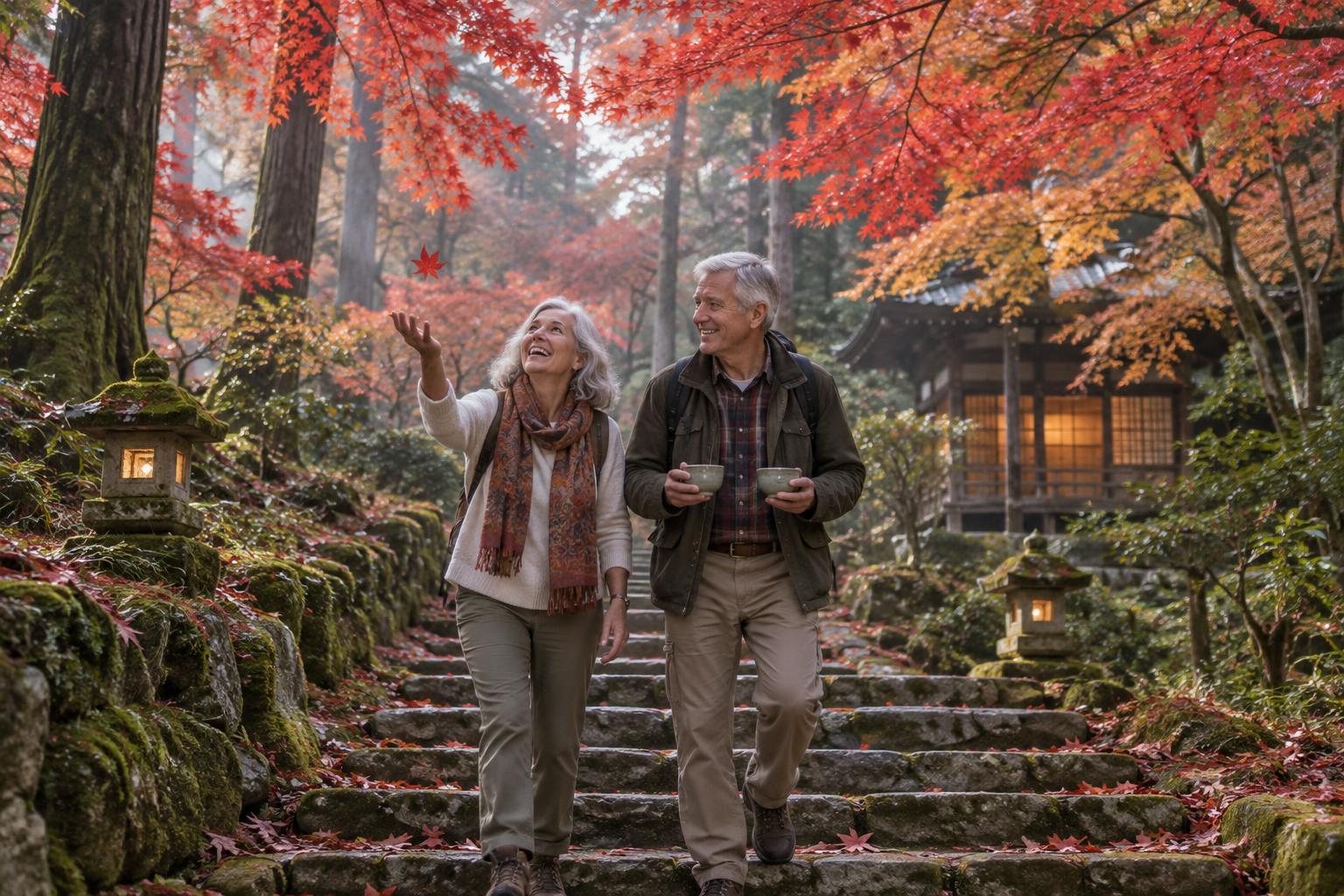
Kyoto has a crowd problem. Kiyomizu-dera at noon in November is a shoulder-to-shoulder shuffle, and the bamboo grove at Arashiyama is mostly selfie sticks. Then there's the other Kyoto, the quiet one, up in the forested hills on the city's northern edge. You turn off a small road, go through a gate, and the noise stops.
That's where you'll find Aman Kyoto: 26 rooms hidden in an 80-acre "secret garden" of moss, stone and cedar, with the famous Golden Pavilion a walk away. This is destination #7 on our 10 Places the People-in-the-Know Actually Go list, and the timing is perfect, because the garden's roughly 3,000 Japanese maples are about to turn red.
A garden built for a museum that never opened
The story starts long before the hotel. The family who owned this land spent decades shaping it. They wanted, as The National put it, to create the most beautiful garden in Japan, and it was meant to surround a textile museum. The museum never happened. But the garden stayed, with its curving stone paths, big moss-covered stone walls and slabs.
When Aman came along, the late architect Kerry Hill didn't clear the land for a big resort. He set low, dark-timber pavilions among the trees so the garden would stay the star. The hotel opened on November 1, 2019, just months before the pandemic shut Japan to visitors, and it has quietly collected awards ever since, including Condé Nast Traveler's Gold List.
It's less a hotel than a place where you hear the forest, take a hot spring bath, and forget what day it is.
What you actually get
- 26 rooms in total: 24 guest rooms plus two private two-bedroom pavilions, spread across a handful of buildings in the forest.
- Big rooms by Japanese standards: the entry rooms are about 60 square meters (roughly 645 square feet), with tatami floors, floor-to-ceiling windows, a king bed and a deep wooden hinoki soaking tub.
- Real hot springs: the spa is built around mineral spring water from right nearby, with onsen bathing included for guests.
- Two restaurants: Taka-An for a seasonal Japanese tasting menu, and the Living Pavilion, with a fire-warmed dining room and a garden terrace.
- A tea house: Tea House Senkutsu, for a proper, unhurried tea ceremony.
Here's the part that changes the math a little. Aman says every stay includes daily breakfast, afternoon matcha with seasonal sweets, an evening aperitif with Champagne, wine and sake, in-room drinks (alcohol included), a guided tour of the garden, hot spring access and bikes for exploring.
What does it cost?
This is a splurge, so let's be upfront about it. In recent rate checks, entry rooms ran from roughly $1,900 to $2,500 a night on quieter dates, and close to $5,000 a night on peak autumn dates. The two-bedroom pavilions run far higher. Prices move with the season and the yen, so check the live rate for your exact dates.
One new cost to know about: since March 1, 2026, Kyoto charges a much higher hotel tax. For rooms costing ¥100,000 or more per person per night, the tax is ¥10,000 per person, per night, about $64 each. For a couple, that's roughly $128 a night on top of the room, and it applies at every high-end hotel in the city, not just Aman.
Ways to make it more doable:
- Do two nights, not seven. Spend most of your Kyoto time at a central hotel, then end the trip in the forest.
- Come for lunch or afternoon tea. Visitors can book the Living Pavilion ahead of time. You get the garden at a fraction of the room price.
- Skip peak weeks. Early autumn, late spring and winter can be calmer and cheaper than peak maple and cherry blossom season.
When to go
- Autumn leaves: in Kyoto, the maples usually peak from mid-November into early December. This is the most beautiful time to visit and the hardest to book.
- Cherry blossoms: usually late March to early April. Same story: gorgeous and in very high demand.
- Winter: quiet, crisp, and when the garden gets the occasional dusting of snow. It's a great time for long soaks in the hot spring.
- Summer: green and lush, but hot and humid. The forest helps, but it's still Kyoto in July.
Getting there from New Jersey
- Fly nonstop to Tokyo from the New York area, then take the bullet train to Kyoto, which takes about two and a quarter hours. The hotel is about 30 minutes by car from Kyoto Station.
- Or fly into Osaka. From Kansai International, it's a 90-minute express train to Kyoto Station or about two hours by car. From Osaka's Itami airport, it's about an hour's drive.
- Let the hotel send a car. After a 14-hour flight, nobody wants to work out taxis with luggage.
- Pair it with the rest of Japan. Aman runs a Japan Journey linking its three Japanese hotels: Aman Tokyo, Amanemu on the coast and Aman Kyoto.
What to do while you're there
- Walk to the Golden Pavilion early. Kinkaku-ji is within walking distance. Go right at opening, before the tour buses arrive.
- Join the garden walk. Aman runs a guided hour through the forest, and it's worth doing on your first afternoon.
- Book a private temple or tea experience. The hotel can arrange tea ceremonies, sketching with a local artist and private temple visits. Ask well ahead, since some need advance planning.
- Do the hot spring, then nothing. The best activity here is a long soak followed by an afternoon matcha on the deck.
Is it right for you? An honest take
Aman Kyoto is not the hotel for a ten-temples-a-day, color-coded itinerary. It's on the edge of the city, so going back and forth to central Kyoto adds up. It's perfect if you want the hotel itself to be the trip: a milestone birthday, an anniversary, or a "we retired, and we're celebrating" moment.
The 55+ checklist before you book
- Steps and slopes: the garden is all stone paths and stone staircases, and the paths get slick in the rain. Pack good walking shoes, and when you book, ask which rooms need the fewest steps.
- Medications, Japan's rules: you can bring up to a one-month supply of your own prescription medicine without paperwork. For more than that, you need an import certificate (called a Yunyu Kakunin-sho) before you leave. Apply at least two weeks ahead. Some common U.S. medicines, including certain pain pills and ADHD drugs, are strictly controlled in Japan and need advance permission, or aren't allowed at all. Check with your doctor and Japan's health ministry before you pack.
- Health coverage: original Medicare generally doesn't cover care outside the U.S. Check your Medigap or Medicare Advantage plan, and look at travel medical and evacuation coverage. We broke that down in our evacuation story.
- Shoes on, shoes off: tatami rooms mean slipping shoes off often. Slip-ons make life easier.
- The long flight: get up and walk the aisle, drink water, and ask your doctor about compression socks if you're at risk for clots.
- Book early for November: 26 rooms plus peak maple season means the best dates go fast, often many months ahead.
Quick answers
Is Aman Kyoto worth the price?
For a milestone trip, yes, especially since breakfast, afternoon tea, an evening aperitif and the hot springs are included. For a regular sightseeing trip, do two nights at the end, or just book lunch or afternoon tea.
How far is Aman Kyoto from the Golden Pavilion?
Kinkaku-ji, the Golden Pavilion, is within walking distance of the hotel. Central Kyoto and Kyoto Station are about a 20- to 30-minute drive.
When is the best time to visit Aman Kyoto?
Mid-November to early December for the autumn leaves, or late March to early April for cherry blossoms. Both are peak seasons, so book far ahead. Winter is the quiet, cozy alternative.
How much is Kyoto's hotel tax now?
Since March 1, 2026, Kyoto charges up to ¥10,000 (about $64) per person, per night for rooms costing ¥100,000 or more per person. Less expensive rooms pay lower rates.
A trip like this is a lot easier to enjoy when you know the money is there for it. If you want a plan that makes room for the bucket list, join our Retirement Webinar: Setting the Stage for 2027.
Next on the list: destination #8, Explora Patagonia, the lodge with what may be the most dramatic window view on earth.
Sources: Aman, Aman Kyoto, rooms and inclusions, dining and fact sheet; Condé Nast Traveler; The National, Nov. 12, 2024; Mr & Mrs Smith room details; Kyoto City accommodation tax change and Nikkei Asia; Japan Ministry of Health, Labour and Welfare, bringing medicines into Japan; Embassy of Japan, medication guidance. Rates are approximate and change by season and exchange rate, so confirm with the hotel. Cover image is AI-created. Checked October 26, 2026. This is general travel information, not medical, insurance or financial advice.
Share a line
Pass this one along
Pick a line, save the card, and send it to whoever needs to read it.
Your next step
Questions about your own retirement?
Talk it through with a licensed advisor on our team. Ask your questions, get straight answers, and leave with a clear place to start. No cost, no obligation, nothing sold on the call.
Run your own numbers
The Let’s Start tool
Prefer to try it yourself first? It’s a calculator that sets a retirement income target and shows how much savings could support it.
Open the Let’s Start →Advisory and insurance services are provided by licensed professionals; availability varies by state.
The Conversation
No comments yet. Tell us where we got it right — or where we're dead wrong.
Comments are for members — it keeps the spam out and the conversation honest.
Create a free account